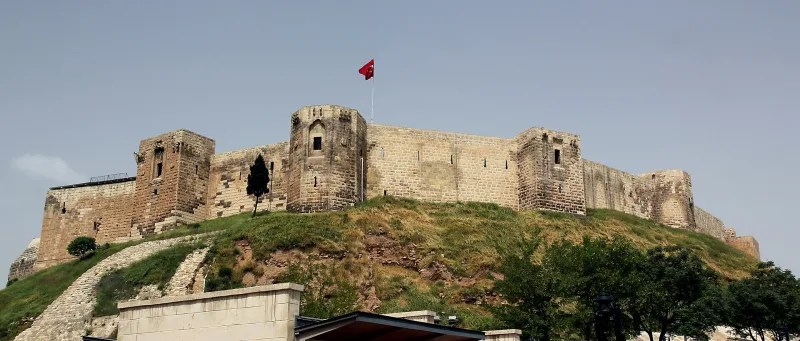
The Synagogue in Gaziantep: History and the 2012 Restoration

The Synagogue in Gaziantep: A Testament to Jewish History at the Crossroads of Civilizations

In the historic center of Gaziantep, just a few steps from the bazaars and mosques, stands a two-story stone building with long-closed gates. This is the Gaziantep Synagogue—also known as the Great Synagogue of Gaziantep (Büyük Gaziantep Sinagogu). As recently as the 1970s, the city’s last Jewish residents gathered here to pray; then they left, and the building stood derelict and neglected for a long time. In 2012, thanks to the joint efforts of Turkey’s Jewish community and the government, the synagogue was restored. In 2014, it was opened to visitors. The synagogue in Gaziantep is a rare and poignant testament to the fact that this city was a multi-faith space long before tourists began to take an interest in it.

History and Origins of the Gaziantep Synagogue

Gaziantep is a historically multi-ethnic city: Turks, Arabs, Armenians, Greeks, and Jews have lived here for centuries. The Jewish community was part of city life for centuries, although the exact date of the synagogue’s construction is unknown. The building, with a capacity of several hundred worshippers, indicates that the Jewish community of Gaziantep was quite significant in its time.

The 20th century brought dramatic changes. The establishment of the State of Israel in 1948, nationalist sentiments in Turkey, and economic difficulties led to a mass exodus of Jewish communities from provincial Turkish cities. In the 1970s, the last remaining Jews of Gaziantep left the city. The synagogue closed—without a community, the building could not function. For several decades, it stood empty and fell into disrepair.

In 2012, restoration work was carried out with the support of the Jewish community of Turkey and the Turkish government—a rare example of interfaith partnership in the preservation of cultural heritage in the region. In 2014, the synagogue was opened to visitors. In December 2019, a Hanukkah celebration was held here with about 200 people in attendance—possibly the first such event in Gaziantep in several decades.

The synagogue is not used as an active house of worship: there is no permanent Jewish community in Gaziantep. However, the building retains its original appearance and is open to anyone wishing to learn about the city’s Jewish heritage.

Architecture and What to See

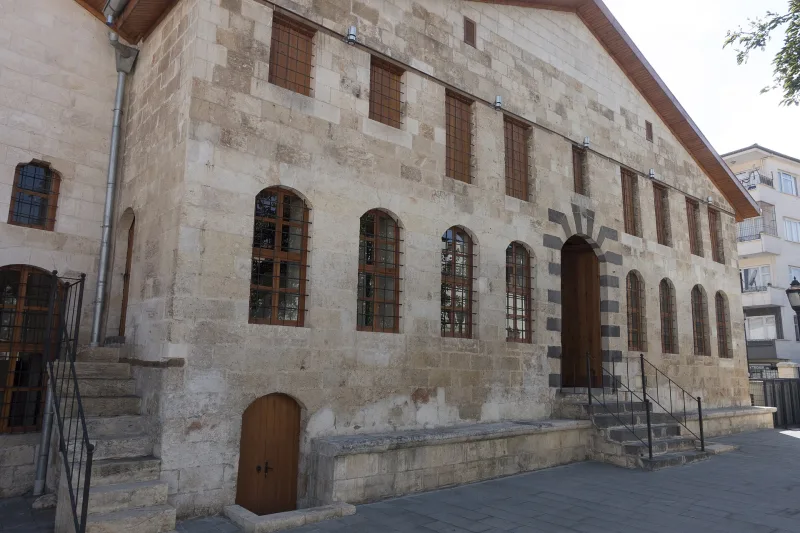
The synagogue is a two-story stone building, large enough to accommodate several hundred worshippers. Its architecture combines local building traditions—hewn stone and facade proportions characteristic of Gaziantep—with elements typical of synagogues in the Middle East and Turkey.

Interior and prayer hall

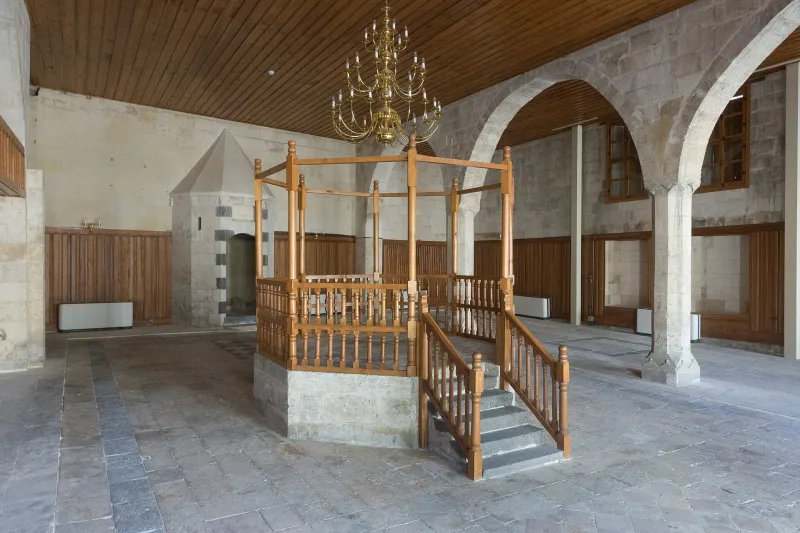
Following the 2012 restoration, the synagogue’s interior was refurbished. The central prayer hall, with a layout traditional for Sephardic synagogues—the bimah (a platform for reading the Torah) in the center, rows of benches on either side—gives an idea of what the worship space of Gaziantep’s Jewish community looked like. The women’s gallery on the second level, the windows with semicircular arches, and the overall layout preserve the building’s appearance as it was before the synagogue was closed.

Stonework and facade

From the outside, the synagogue makes a modest impression: this is characteristic of synagogues in Muslim countries, where Jewish houses of worship were traditionally built without ostentatious decoration. The stone of the walls has darkened with age; the restoration preserved the building’s authentic appearance without attempting to “refine” it in the modern sense.

Context: Multiconfessional Gaziantep

The synagogue is located in the same historic district as the city’s other religious monuments. Mosques, Armenian churches, and now a synagogue—all are neighbors within a few blocks. For visitors interested in the history of interfaith coexistence, a tour of Gaziantep’s historic center offers a rare opportunity to witness this diversity within a single city.

Interesting Facts and Legends

  • In December 2019, the synagogue hosted a Hanukkah celebration attended by about 200 people—presumably one of the first public Jewish events in Gaziantep in many decades.
  • The date of the synagogue’s construction is unknown. This is typical for Jewish communities in provincial Turkish cities: the documented history of such buildings is often fragmentary.
  • The 2012 restoration was the result of a collaboration between the Jewish community of Turkey and the state. This is a relatively rare example of state involvement in the preservation of non-Turkish religious heritage in the provinces.
  • The synagogue remained in use until the 1970s—that is, it survived World War II, the establishment of the State of Israel, and the early years of the Cold War, and it was only the economic and demographic shifts of the postwar decades that brought an end to its active life.
  • The Gaziantep synagogue is one of about two dozen active or open-to-the-public synagogues in Turkey—a country where most Jewish places of worship are concentrated in Istanbul.

How to get there

The synagogue is located in the historic center of Gaziantep, within walking distance of the castle and the Alauddin Mosque. Oğuzeli Airport (GZT) is a 20–25-minute taxi ride away. Public transportation will take you to the historic district; the exact address is easy to find using GPS coordinates or a navigation app.

Gaziantep is a compact city; the main attractions of the historic center are concentrated within a 30-minute walking radius. The synagogue can easily be included in a walking tour along with Gaziantep Castle, the mosques, and the Zeugma Mosaic Museum.

Tips for Travelers

The synagogue is open to visitors, but it’s best to check the hours in advance: as an abandoned and non-religious building, it may have irregular hours. Admission is usually free or nominal. We recommend bringing a small light source—the interior may be dimly lit.

The building is located in a residential neighborhood; please respect the neighbors’ peace and do not photograph people without permission. The synagogue is a sensitive religious site for Turkey’s Jewish community—please visit it with due respect.

Gaziantep is, in general, an exceptional city in terms of interfaith history: the mosques, Armenian churches, and synagogue in Gaziantep together form a rare testament to how different religious traditions coexisted within a single city over the course of several centuries.
Your comfort is important to us, click on the desired marker to create a route.
Meeting for minutes before
Yesterday. 17:48
Frequently asked questions — The Synagogue in Gaziantep: History and the 2012 Restoration Answers to frequently asked questions about The Synagogue in Gaziantep: History and the 2012 Restoration. Information about the service's operation, capabilities, and use.
The exact date of construction is unknown—a common situation for Jewish communities in provincial Turkish cities, where the documented history of buildings is often fragmentary. All that is known is that the building could accommodate several hundred worshippers, which indicates that the Jewish community of Gaziantep was quite large in its day. The synagogue is classified as medieval according to historical classification.
No. There is no permanent Jewish community in Gaziantep today, so regular services are not held there. The last Jewish residents left the city in the 1970s. Nevertheless, the building is used for cultural events: in December 2019, a Hanukkah celebration was held here with about 200 people in attendance—one of the first public Jewish events in the city in many decades.
The restoration was carried out in 2012 through a joint effort by the Jewish community of Turkey and the Turkish government. In 2014, the building was opened to the public. This project is considered a rare example of interfaith partnership in the preservation of cultural heritage: the government took part in the preservation of a non-Turkish religious site in the province.
A mass exodus of Jews from provincial Turkish cities took place in the second half of the 20th century. Key factors included the establishment of the State of Israel in 1948, the rise of nationalist sentiment in Turkey, and economic hardships. In the 1970s, the last Jewish residents of Gaziantep left, and the synagogue closed. It is noteworthy that the building survived World War II and continued to function for several more postwar decades.
The synagogue is one of about two dozen synagogues in Turkey that are open to the public or still in use. Most of the country’s Jewish places of worship are concentrated in Istanbul, which is why the synagogue in Gaziantep—a provincial site—holds special historical significance. It clearly demonstrates that Jewish communities existed far beyond the country’s major cities.
This is a two-story stone building constructed in the local architectural tradition: hewn stone and facades with proportions characteristic of Gaziantep. The exterior is understated—synagogues in Muslim countries were traditionally built without ostentatious decoration. Inside is a central prayer hall with a bimah (a platform for reading the Torah) in the center, rows of benches on either side, and a women’s gallery on the second level. The 2012 restoration preserved the building’s authentic appearance.
Admission is usually free or nominal. However, the synagogue does not operate like a typical museum or religious site with set hours. Before your visit, we recommend checking the current hours of operation with Gaziantep’s tourist offices or local sources.
First and foremost, it will appeal to those interested in the history of interfaith coexistence, the Jewish heritage of the Middle East, and the multi-ethnic history of Anatolia. The synagogue will be a valuable stop for historians, photographers, and travelers planning a route through Gaziantep’s religious sites. The site is not designed for mass tourism, so it is appreciated by those seeking unique historical insights.
The synagogue is located in the same historic district as the mosques and the remnants of the Armenian Christian presence. For centuries, Gaziantep has been a multi-ethnic city: Turks, Arabs, Armenians, Greeks, and Jews have lived here. The synagogue, mosques, and Armenian churches are neighbors within a few blocks of each other, and it is precisely in this context that a visit to the site takes on special significance.
No, the synagogue in Gaziantep is not included on the UNESCO World Heritage List. Nevertheless, it is a protected cultural monument that has been restored with government support. Gaziantep itself is known for its cultural heritage sites—primarily the Zeugma Mosaic Museum and the castle—but the synagogue is not officially included among them.
Yes. The synagogue is a religious site and remains an important place for Turkey’s Jewish community, so visitors should behave respectfully. The building is located in a residential neighborhood—please do not disturb the neighbors. It is not recommended to take photos of people without their consent. It is recommended that you bring a small light source with you, as the interior may be dimly lit.
User manual — The Synagogue in Gaziantep: History and the 2012 Restoration The Synagogue in Gaziantep: History and the 2012 Restoration User Guide with a description of the main functions, features, and principles of use.
The best time to visit is spring (March–May) or fall (September–November), when temperatures are pleasant and the summer heat has subsided. Gaziantep is well-connected by air: Oğuzeli Airport (GZT) receives flights from Istanbul, Ankara, and other cities. Plan at least one full day for the historic center, including the synagogue in your walking tour along with other sites.
It takes about 20–25 minutes by taxi from Oğuzeli Airport to the historic center. Public transportation also serves the historic district. Gaziantep’s historic center is compact: the main attractions are concentrated within a 30-minute walking radius. Use the GPS coordinates (37.064166, 37.381645) or a navigation app to find the synagogue.
The synagogue does not operate on a standard museum schedule, so it is best to check the opening hours in advance through the Gaziantep Tourist Information Center or local sources. Admission is usually free or nominal. If you plan to visit as part of a group or would like a guided tour, please check availability in advance.
Bring a small flashlight or make sure your phone is fully charged: the interior of the synagogue may be dimly lit. Wear comfortable walking shoes—you’ll likely be visiting several sites in the historic district one after another. Remember that the synagogue is a religious site: dress modestly and be respectful.
Outside, take note of the stone façade: the understated decor is a deliberate feature of synagogues in Muslim countries. Inside, examine the layout of the Sephardic-style prayer hall: the bimah in the center, benches on either side, and a women’s gallery on the second level. The semicircular windows and the overall atmosphere give a sense of what the Jewish community’s place of worship looked like until the 1970s.
The synagogue is located just a few minutes’ walk from Gaziantep Castle and the Alauddin Mosque. Traces of the Armenian Christian presence can be found in the same historic district. Combining these sites allows visitors to experience the city’s entire interfaith history in a single walking tour. You can round out the day with a visit to the Zeugma Mosaic Museum—one of Gaziantep’s main cultural attractions.
The synagogue is most impressive when viewed in its historical context: it is not merely a building, but a testament to the fact that Gaziantep has been a multi-ethnic and multi-faith city for centuries. As you leave the neighborhood, please respect the peace and quiet of the nearby residential buildings. If you’d like to explore the topic further, the Gaziantep Museum (Gaziantep Müzesi) offers exhibits on the region’s history.